Blogs
Contact me today!
I'm happy to help.
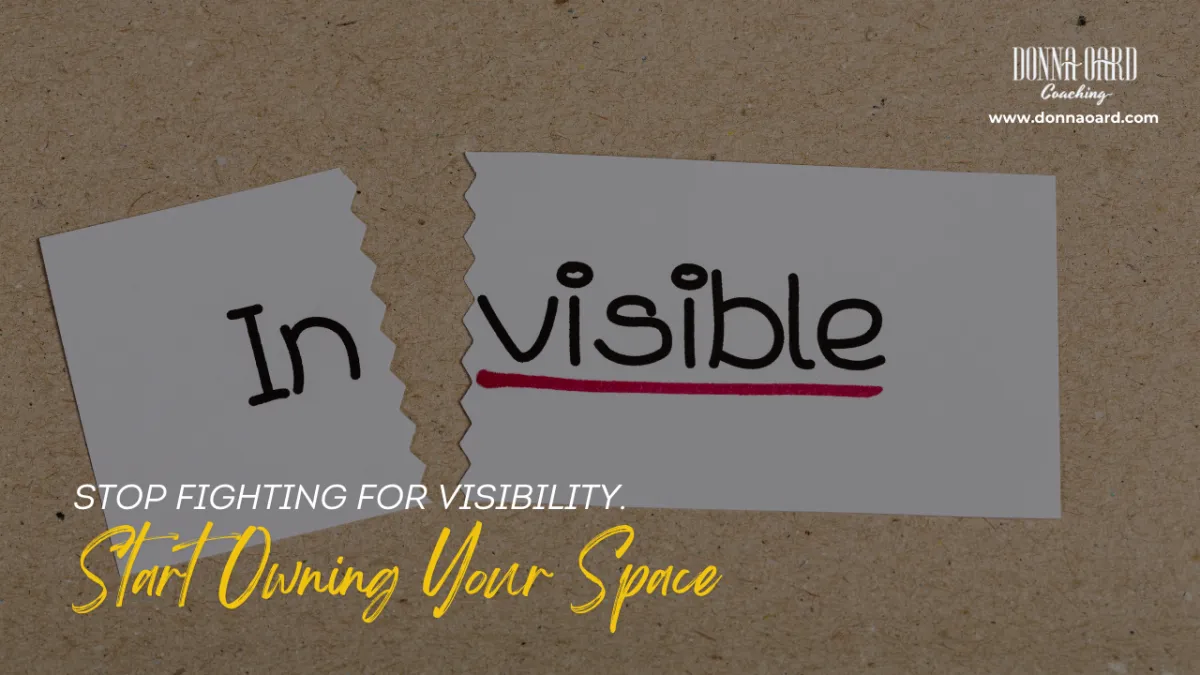
Stop Fighting for Visibility. Start Owning Your Space.
Many accomplished leaders reach a point in their careers where something feels misaligned, even though outward indicators suggest success. Credentials are solid. Results are consistent. Responsibility is significant. Yet, in key moments, their presence feels diminished. This experience is often described as feeling invisible. Not overlooked in an obvious way, and not dismissed outright, but subtly unseen. It is a quiet frustration that can persist even at senior levels of leadership.
The common response is to increase effort. Leaders speak more frequently, prepare more extensively, and attempt to advocate more assertively. While these actions are well intentioned, visibility is not created through force. It is not sustained through overexertion. True leadership visibility is cultivated differently.
Understanding the Misconception Around Visibility
Visibility is frequently mistaken for volume. There is an assumption that being seen requires being louder, more assertive, or more dominant in professional spaces. In practice, visibility is more closely tied to clarity, presence, and internal alignment.
Leaders who are anchored in their value do not rely on repetition or justification to be heard. Their contributions carry weight because they are delivered from conviction rather than insecurity. Their presence communicates steadiness, not urgency.
When leaders feel unseen, it is rarely a reflection of insufficient capability. More often, it reflects an ongoing belief that permission is still required to fully occupy their role.
How Leaders Unintentionally Diminish Their Presence
High-performing leaders often engage in behaviors that quietly reduce their visibility, without conscious intent.
They over-prepare to avoid scrutiny.
They over-explain to prevent misunderstanding.
They wait for formal invitations before contributing.
They soften perspectives to avoid discomfort or resistance.
These behaviors are not signs of weakness. They are often learned responses that once supported advancement and acceptance. Over time, however, the same patterns can limit authority and impact. What previously enabled progress can eventually restrict leadership presence.
Ready to move beyond effort-based visibility and into grounded authority? Schedule a confidential strength assessment to examine internal leadership patterns, clarify sources of hesitation or overextension, and identify opportunities for greater confidence and impact.
The Shift Toward Anchored Self-Leadership
A meaningful transformation occurs when leaders stop attempting to navigate systems through effort alone and begin leading from an internal anchor.
Anchored self-leadership is the ability to operate from a clear understanding of one’s value, judgment, and contribution. It does not require external validation to remain stable. Decisions are made with intention. Communication is measured rather than reactive. This shift does not involve becoming more forceful or dominant. It involves becoming more grounded.
Leaders who are internally anchored no longer expend energy proving their legitimacy. Their presence conveys authority through consistency, clarity, and calm.
What It Means to Own Your Space
Owning one’s space is a practical leadership posture. It is reflected in everyday behaviors and decisions.
Speaking with clarity rather than urgency.
Offering perspectives without apology.
Allowing silence without rushing to fill it.
Making decisions without excessive justification.
Over time, this posture changes how others respond. Not because attention is demanded, but because confidence is no longer diluted. Visibility emerges naturally when leaders stop relinquishing their authority through self-doubt.
Consider where you may still be seeking permission rather than trusting your leadership. This question often reveals the precise point where growth is ready to occur. Leadership development at this level is not about acquiring more skills. It is about strengthening internal alignment and presence.
Streamline Your Meetings: 4-Point Executive Checklist
Get instant access to a free checklist designed to help leaders master productive meetings—plus join our 5-day FREE masterclass for deeper insights and strategies!



© 2024 Donna Oard